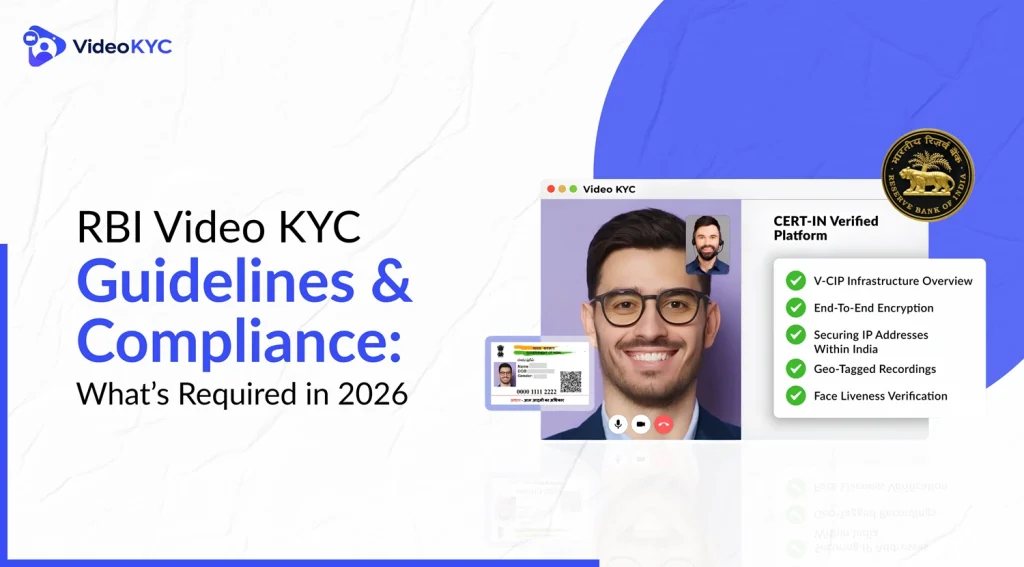
Opening a bank account used to mean taking a half-day off. The process was to gather the documents, walk to a branch, stand in a long line, then sit in a conference room with a bank official and give them paper copies of all your items. The process is changing — fast through Video KYC.
If you’ve heard the phrase but aren’t fully aware of the meaning and how it functions, or what it means. This guide will cover everything.
What Is Video KYC?
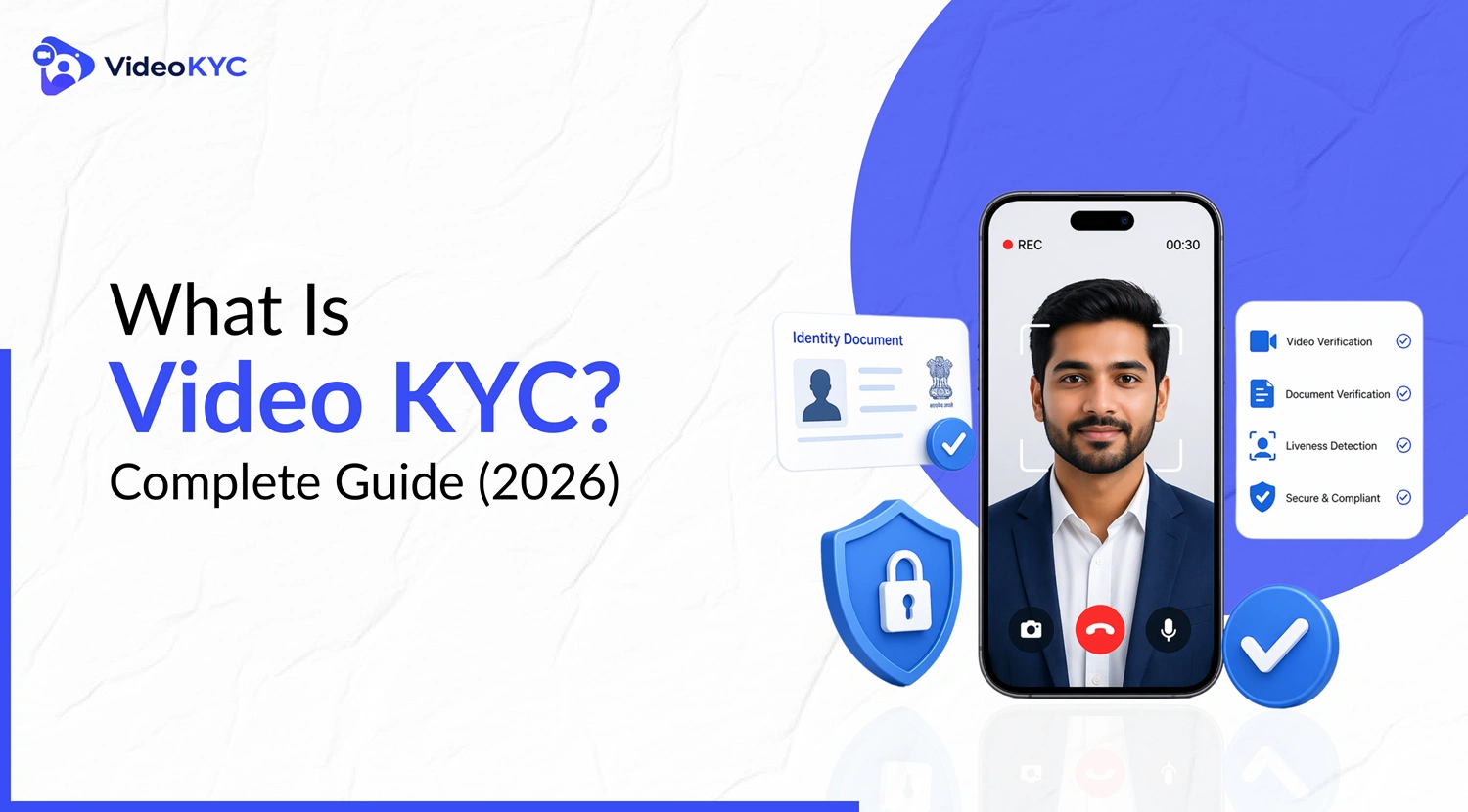
Video KYC stands for Video Know Your Customer. It is a digital method of verifying a customer’s identity using a live video call, instead of requiring them to visit a physical location or submit paper documents.
In India, the formal name for the process is V-CIP — Video-based Customer Identification Process. The Reserve Bank of India first permitted this method in January 2020, and it has since been adopted widely across banking, lending, insurance, and fintech.
The basic idea is simple: a customer connects to a live video session with a trained official of the financial institution, shows their identity documents on camera, and completes the verification process from wherever they are. The session is recorded, the data is stored securely, and the customer is onboarded — often within minutes.
How Does Video KYC Work? (Step by Step)
While the exact flow varies slightly across providers, a typical Video KYC session follows this sequence:
Step 1 — Customer Initiates the Process
The customer clicks a link or opens an app and enters their basic details. They may complete a preliminary form or consent screen before the video session begins.
Step 2 — Consent Is Recorded
Before the video call starts, the customer gives explicit consent for the session to be recorded and for their data to be used for identity verification. This consent is stored as part of the compliance record.
Step 3 — Identity Document Is Verified
The customer holds their identity document — typically a PAN card, and sometimes Aadhaar or another officially valid document — up to the camera. The system captures the document, reads the information on it, and checks its authenticity.
Step 4 — Face Match
The system compares the customer’s live face with the photograph on the identity document. This is done automatically using facial recognition technology, and the
result is logged.
Step 5 — Liveness Check
The customer may be asked to perform a simple action — turning their head, blinking, or following an on-screen instruction. This confirms that the person on the call is physically present and not a photograph or video.
Step 6 — Official Reviews and Approves
A trained official from the financial institution reviews the session — either in real time or immediately after — and approves or flags the application.
Step 7 — Record Is Stored
The full session recording, along with all the captured data, is stored securely on India-based servers as required by RBI guidelines. The whole process typically takes between three and ten minutes.
Video KYC vs. Traditional KYC vs. Aadhaar eKYC
These three terms are often used interchangeably, but they describe different things:
| Feature | Traditional KYC | Aadhaar eKYC | Video KYC |
|---|---|---|---|
| Visit branch? | Yes | No | No |
| Live video required? | No | No | Yes |
| Aadhaar mandatory? | No | Yes | No |
| Processing time | Hours to days | Minutes | Minutes |
| Cost to institution | High | Low-medium | Low |
Video KYC occupies a useful middle ground. It does not require Aadhaar and allows the institution to verify original documents on camera — making it suitable for a wide range of products and customer types.
Who Uses Video KYC in India?
Video KYC is now used across a broad range of financial services:
- Banks and Small Finance Banks — for savings account opening, credit card applications, and loan disbursement.
- NBFCs and Lending Platforms — for personal and business loan applications where physical branch visits are impractical.
- Mutual Fund Distributors and Investment Platforms — for investor onboarding in compliance with SEBI’s KYC requirements.
- Insurance Companies — for policy onboarding, particularly for life and health products.
- Payment Aggregators and Wallets — for merchant onboarding and upgrading customers to higher transaction limits.
- Account Aggregators — for customer verification as part of the consent framework.
Benefits of Video KYC
For customers:
- No need to visit a branch or submit physical paperwork.
- Can be completed from home, the office, or anywhere with a stable internet connection.
- Fast — most sessions are completed in under ten minutes.
- No requirement to share original documents by post or courier.
For financial institutions:
- Significant reduction in operational costs compared to in-branch KYC.
- Faster onboarding means higher conversion rates for digital products.
- Verifiable audit trail stored automatically.
- Reduced risk of document fraud compared to manual in-person checks.
Limitations of Video KYC
- Internet and device requirements — customers need a smartphone or laptop with a working camera and stable internet.
- Not available 24/7 in all implementations — RBI requires a trained official to be present during the session.
- Susceptibility to fraud — without strong AI-based detection, sessions can be targeted by deepfake and document spoofing attacks.
- Not applicable to all products — certain high-risk products may still require physical verification.
The Video KYC Market in 2026
Market Size
The global Video KYC market was valued at approximately $0.29 billion in 2024. It is projected to reach $1.03 billion by 2033, growing at a CAGR of around 15%. India is one of the fastest-growing markets within this segment.
Frequently Asked Questions
Q – Is Video KYC mandatory?
A – No. V-CIP is one permitted KYC method, not the only one. For digital-first products, it is often the most practical option.
Q – Can Video KYC be done on a mobile phone?
A – Yes. Most platforms work on smartphones and laptops. A front-facing camera and stable internet are the main requirements.
Q – How long does a Video KYC record need to be stored?
A – Under RBI guidelines, KYC records must be retained for at least five years after the business relationship ends.
Q – What documents are accepted for Video KYC?
A – The primary document is the PAN card. Other accepted documents include Aadhaar (with consent), passport, voter ID, and driving licence — depending on the product and institution.
VKYC AI provides regulated entities with a compliant, AI-powered Video KYC platform built for India’s BFSI sector. This document is updated with every significant regulatory development.